On Monday we spent our class talking Avraham Avinu (Abraham our father). We began by talking about his call from Hashem (Genesis 12) and whether or not we thought it was a literal call or more of a gut feeling or inspiration. The students offered a number of interesting suggestions for what kind of man they thought Abraham must have been, which I hope they'll share in the comments. I also asked them if they think they go with their gut/inspiration, and, if so, if that's a good thing.
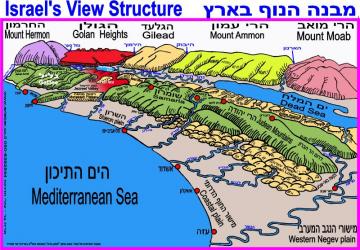
Moving forward in Avraham's life we see that he travels along derekh hahar (the mountain road) to arrive at Shechem (near modern day Nablus in the West Bank). Whereas most of the modern Israeli population is located on the coastal plain, traditionally it's the mountainous interior where most Jews lived. This is an important fact to keep in mind when we talk about giving up land for peace. The Tanakh tells us that Avraham avinu, the founder of our people, lived in the area that, if there's a two state solution, will one day be a part of Palestine.
He then continues down into Egypt where he curiously refers to his wife Sarah as his "sister". After giving the students a chance to think of reasons why he might do this I told them about the Nuzi documents, documents found in modern day Iraq that mention a legal principle in which the sister-wife is the most important wife. But if we accept that explanation then there are other incongruities in the story (and my understanding is that the most recent evidence suggests that sister-wife explanation might be flawed). For example, if this was a well-known status, why were the Egyptians angry when they found out about it? Understanding the Tanakh is rarely simple. Solving one problem often creates another.
We then talked about one of Avraham's most well-known brits (covenants), his circumcision. As with every covenant there are two sides; Avraham promises to walk in Hashem's ways and God promises to give Avraham the land of Canaan and make him the father of a great nation. The physical sign for this brit is circumcision (brit milah in Hebrew).
Perhaps more interesting than the brit milah itself is what happens afterward. Avraham is sitting in his tent, talking to Hashem when three strangers walk up. Avraham immediately rises to greet them (after just getting circumcised as an old man no less!), completely ignoring Hashem. In these few short verses we learn a number of things (and see how the Tanakh is simultaneously an incredible piece of literature and an instruction manual for how to live your life). First, we see Avraham ignore Hashem (who is in the middle of bikur holim, visiting the sick) for the sake of three strangers. In Judaism we divide the 613 mitzvot (commandments) in a number of ways: do/don't do, understand (don't murder) and can't understand (keeping kosher), etc. In Avraham's behavior we see one of the most important divisions, the difference between mitzvot ben adam l'makom (commandments that deal with the relationship between humans and god) and mitzvot ben adam l'chavero (commandments that deal with the relationship between humans). Unlike other religions of the time (and perhaps even of our own time) in Judaism the interactions between people are more important than those between people and Hashem. As I'm sure many of you are aware on Yom Kippur Jews are expected to apologize to the person we wronged, not ask forgiveness from Hashem.
Another interesting mitzva we see demonstrated here is "welcoming the strangers." Even today in desert cultures the idea of hospitality is incredibly important. Given the difficulty of traveling in the desert--little food, even less water--hospitality may well save your life. So while Avraham is making the effort toward his guests in this case, he may well be the needy one next time. Not only is "welcoming the guest" a lovely value, it's a clear reminder of the fact that Am Yisrael began in a desert landscape as nomads.
Having learned a bit about what kind of man the founder of Am Yisrael is we arrived to what, in my opinion, is the most challenging aspect of the Avraham story. Hashem tells Avraham he's going to destroy Sodom and Gemorrah. Avraham, unhappy with this decision, argues with Hashem, questioning whether Hashem will destroy the righteous together with the wicked. Avraham negotiates with Hashem over how many righteous people need to be present to make the towns worth saving, starting with 50 and eventually talking Hashem down to ten. What chutzpah! A few verses later Hashem commands Avraham to sacrifice his only son, Yitzchak, and Avraham doesn't make a peep. For me, this is a difficult series of events to try and understand. We know that Avraham is willing to argue with Hashem, but doesn't try to save his only son. Is Avraham willing to argue for the public good, but not for his personal happiness? Is God testing Avraham? If so, what's the test? Is it, as tradition teaches, a test of Avraham's faith? Is it a test to see whether Avraham understands that Judaism is a truly different religion that doesn't demand human sacrifice? Is Avraham testing God? How do you think this episode affects Avraham's relationship with God? His relationship with Yitzchak? How do you think this event affects Yitzchak? I look forward to hearing all your suggestions in the comments.
Moving forward in Avraham's life we see that he travels along derekh hahar (the mountain road) to arrive at Shechem (near modern day Nablus in the West Bank). Whereas most of the modern Israeli population is located on the coastal plain, traditionally it's the mountainous interior where most Jews lived. This is an important fact to keep in mind when we talk about giving up land for peace. The Tanakh tells us that Avraham avinu, the founder of our people, lived in the area that, if there's a two state solution, will one day be a part of Palestine.
He then continues down into Egypt where he curiously refers to his wife Sarah as his "sister". After giving the students a chance to think of reasons why he might do this I told them about the Nuzi documents, documents found in modern day Iraq that mention a legal principle in which the sister-wife is the most important wife. But if we accept that explanation then there are other incongruities in the story (and my understanding is that the most recent evidence suggests that sister-wife explanation might be flawed). For example, if this was a well-known status, why were the Egyptians angry when they found out about it? Understanding the Tanakh is rarely simple. Solving one problem often creates another.
We then talked about one of Avraham's most well-known brits (covenants), his circumcision. As with every covenant there are two sides; Avraham promises to walk in Hashem's ways and God promises to give Avraham the land of Canaan and make him the father of a great nation. The physical sign for this brit is circumcision (brit milah in Hebrew).
Perhaps more interesting than the brit milah itself is what happens afterward. Avraham is sitting in his tent, talking to Hashem when three strangers walk up. Avraham immediately rises to greet them (after just getting circumcised as an old man no less!), completely ignoring Hashem. In these few short verses we learn a number of things (and see how the Tanakh is simultaneously an incredible piece of literature and an instruction manual for how to live your life). First, we see Avraham ignore Hashem (who is in the middle of bikur holim, visiting the sick) for the sake of three strangers. In Judaism we divide the 613 mitzvot (commandments) in a number of ways: do/don't do, understand (don't murder) and can't understand (keeping kosher), etc. In Avraham's behavior we see one of the most important divisions, the difference between mitzvot ben adam l'makom (commandments that deal with the relationship between humans and god) and mitzvot ben adam l'chavero (commandments that deal with the relationship between humans). Unlike other religions of the time (and perhaps even of our own time) in Judaism the interactions between people are more important than those between people and Hashem. As I'm sure many of you are aware on Yom Kippur Jews are expected to apologize to the person we wronged, not ask forgiveness from Hashem.
Another interesting mitzva we see demonstrated here is "welcoming the strangers." Even today in desert cultures the idea of hospitality is incredibly important. Given the difficulty of traveling in the desert--little food, even less water--hospitality may well save your life. So while Avraham is making the effort toward his guests in this case, he may well be the needy one next time. Not only is "welcoming the guest" a lovely value, it's a clear reminder of the fact that Am Yisrael began in a desert landscape as nomads.
Having learned a bit about what kind of man the founder of Am Yisrael is we arrived to what, in my opinion, is the most challenging aspect of the Avraham story. Hashem tells Avraham he's going to destroy Sodom and Gemorrah. Avraham, unhappy with this decision, argues with Hashem, questioning whether Hashem will destroy the righteous together with the wicked. Avraham negotiates with Hashem over how many righteous people need to be present to make the towns worth saving, starting with 50 and eventually talking Hashem down to ten. What chutzpah! A few verses later Hashem commands Avraham to sacrifice his only son, Yitzchak, and Avraham doesn't make a peep. For me, this is a difficult series of events to try and understand. We know that Avraham is willing to argue with Hashem, but doesn't try to save his only son. Is Avraham willing to argue for the public good, but not for his personal happiness? Is God testing Avraham? If so, what's the test? Is it, as tradition teaches, a test of Avraham's faith? Is it a test to see whether Avraham understands that Judaism is a truly different religion that doesn't demand human sacrifice? Is Avraham testing God? How do you think this episode affects Avraham's relationship with God? His relationship with Yitzchak? How do you think this event affects Yitzchak? I look forward to hearing all your suggestions in the comments.